
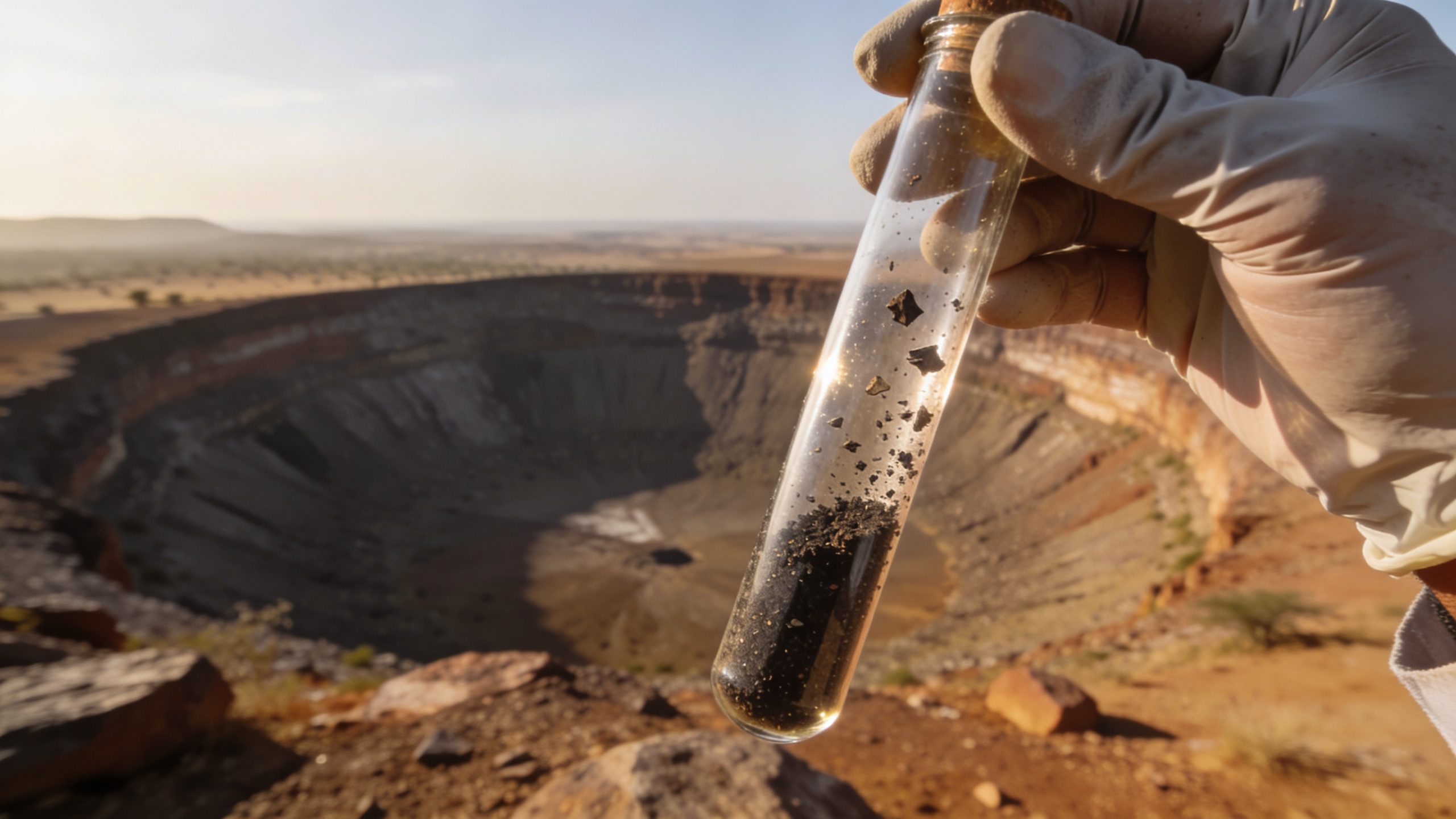
Scientists studying the Ramgarh crater in Rajasthan have discovered tiny magnetic particles in the site’s sediments. This finding is a significant step toward identifying the specific type of asteroid that created the impact structure thousands of years ago.
Understanding the Geological Discovery
Located in the Baran district of Rajasthan, the Ramgarh crater is one of India’s few confirmed meteorite impact sites. The recent research involved a detailed examination of geological layers and sediments that have accumulated inside the crater over millennia. The identified magnetic particles are believed to be remnants of the original celestial body or minerals formed during the high-energy impact event.
Identifying Asteroid Origins
The primary objective of analyzing these particles is to determine the nature of the asteroid. Different types of space rocks possess distinct magnetic signatures and mineral compositions. By studying these microscopic remnants, researchers aim to classify whether the impactor was an iron-rich asteroid, a stony asteroid, or another celestial object. This information helps planetary scientists understand the history of asteroid impacts on Earth and the evolution of the solar system.
Scientific Significance and Future Research
These findings were recently presented at a scientific forum, underscoring the importance of the Ramgarh crater research. Further analysis will involve advanced laboratory techniques to examine the composition and structure of the particles in greater detail. This work highlights India’s contribution to global geology and reinforces the need to protect and study significant geological heritage sites to uncover the secrets of the planet’s ancient past.